Laser marking and cutting falls into two main technology camps: fiber lasers and CO2 lasers. Each excels at different materials, and using the wrong one produces poor results.
Fiber Lasers (1064nm) — Optimized for metals: stainless steel, aluminum, brass, copper, titanium, and coated metals. The 1064nm wavelength is efficiently absorbed by metallic surfaces, creating permanent marks through annealing (color change), engraving (material removal), or cutting (for thin metals up to 3mm).
CO2 Lasers (10,600nm) — Optimized for organic materials: wood, acrylic, leather, paper, fabric, and glass. The longer wavelength is absorbed by non-metallic surfaces. CO2 lasers cannot effectively mark bare metals.
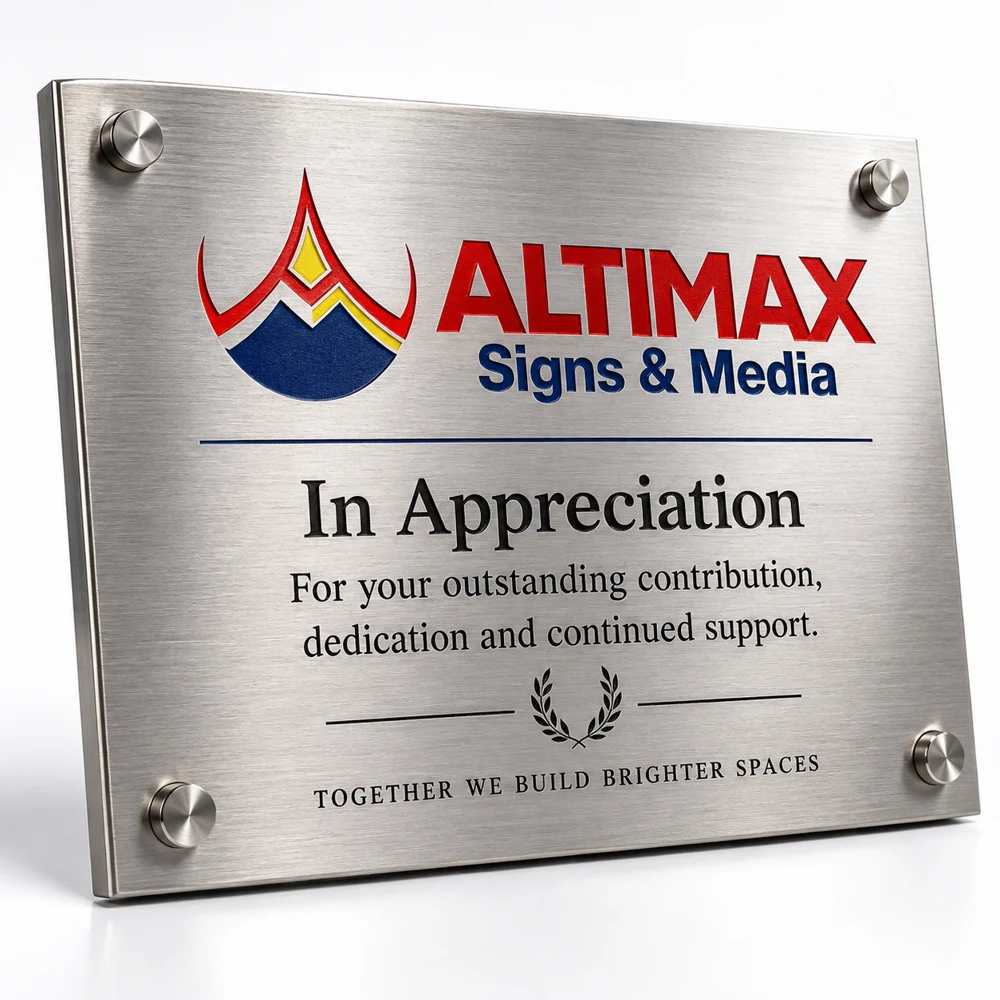
At Altimax, we operate fiber laser systems because our core applications — asset tags, nameplates, award plaques, and industrial marking — are metal-focused. For acrylic cutting, our CNC router provides superior edge quality compared to CO2 laser cutting.
Put the idea into practice.
Tell us what you’re planning and we’ll help you choose products, materials and a suitable production approach.
Start your quote